
Confidence in business is often mistaken for personality or presence. In reality, it’s more accurately reflected in how clearly we communicate and how comfortably we stand behind what we offer. The way we speak, follow up and set expectations sends a powerful message about the confidence we have in our product or service.
Many confidence issues in business don’t stem from uncertainty about capability, but from hesitation in communication. This often shows up in small, everyday moments — a delayed follow-up, a call not returned, or language that unintentionally softens our position.
A common example is the phrase, “I know you’re busy.” While well-intentioned, it subtly frames the conversation as an interruption. It suggests that the message may be an inconvenience rather than a valuable exchange. Over time, this kind of language can signal a lack of confidence in the importance of what’s being offered.
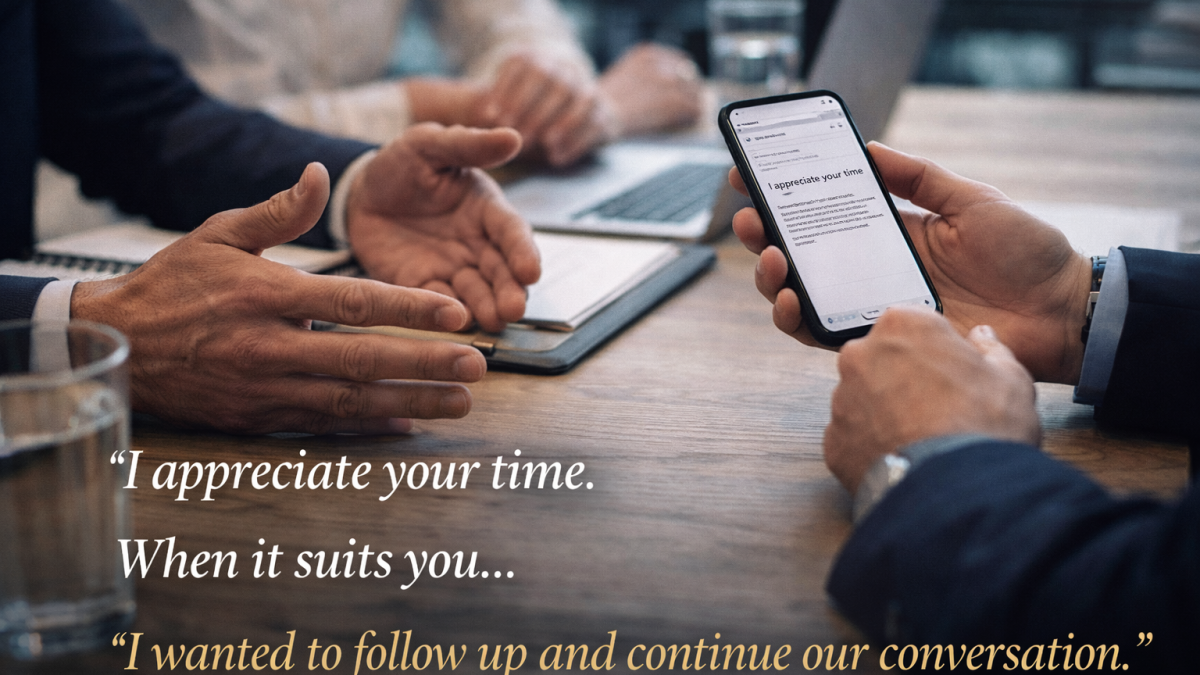
A more confident approach respects time without diminishing value. Language such as “I appreciate your time,” “When it suits you,” or “I wanted to follow up and continue our conversation” keeps the interaction balanced and professional. These small shifts reinforce confidence — not only in yourself, but in the relevance of your product or service.
Confidence is also reflected in how we handle delayed responses. Rather than over-explaining or apologising excessively, a simple acknowledgment such as “Thank you for your patience — it’s good to reconnect” demonstrates composure and professionalism. It keeps the focus on the relationship and the conversation ahead, rather than on perceived missteps.
This clarity becomes even more important when pitching for work or engaging with potential clients. Confidence in what you offer is demonstrated by how clearly expectations are set from the outset. If an initial consultation is chargeable, that’s entirely reasonable — provided it’s communicated upfront. Some choose to credit that fee toward the final engagement if the work proceeds, while others don’t. Either approach is valid.
What matters is transparency. Clear conversations about costs, process and next steps signal confidence and respect for everyone’s time. When expectations are aligned early, trust is built. When they aren’t, even the strongest product or service can be undermined by frustration or misunderstanding.
Confidence doesn’t need to be loud or assertive. It shows up in calm, clear communication, in the ability to articulate value without apology, and in the willingness to be upfront about how you do business. In the end, confidence in business is not just about how you show up — it’s reflected in how confidently you stand behind what you offer.
About the Author
Lena Coates is the CEO and lead coach of Coates & Associates, a Melbourne-based boutique coaching practice specialising in career, life and transformative coaching for professionals at pivotal stages of their journey. With over 25 years of corporate leadership, executive search and coaching experience, she brings a personalised, evidence-based approach using methodologies accredited by the International Coaching Federation to help clients gain clarity, confidence and fulfilment in both their careers and lives. Lena’s work blends professional insight with holistic wellbeing principles, ensuring coaching outcomes that support sustained success and resilience.
To get in contact with Lena, click here