
Let me share a number that stopped me in my tracks.
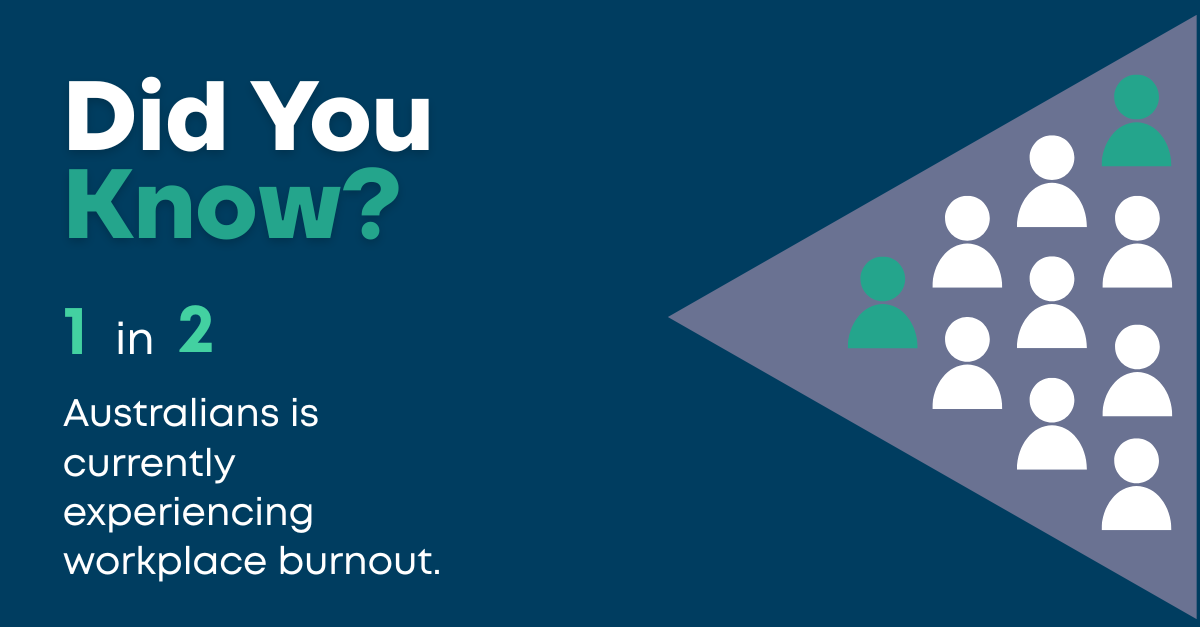
1 in 2 Australians is currently experiencing workplace burnout.
Not stress. Not a difficult week. Burnout: the kind that doesn’t resolve with a long weekend, a wellness app, or a well-intentioned email from HR.
That figure comes from Beyond Blue’s 2025 national poll, and when you sit with it, it raises a question every Australian business leader should be asking right now:
If half your workforce is burning out, what is that actually costing your organisation, and what are you doing about it?
This Is Not a Wellbeing Trend. It’s a Business Crisis.
Burnout-related absenteeism and lost productivity cost the Australian economy an estimated $14 billion annually. Workplace mental health conditions now account for 12% of all serious workers’ compensation claims, a figure that has risen by 161% over the past decade, according to Safe Work Australia data.
And here is the figure that should concern every CFO and CEO: the average cost of a psychological injury claim has climbed from $146,000 in 2019 to $288,542 in 2024–25. Mental health claims represent just 12% of total claims but account for a staggering 38% of total compensation costs.
This is not a soft issue. It is a significant and measurable business risk.
Why Is It Getting Worse?
The data points to a clear set of drivers. According to Beyond Blue’s research, the primary contributors to burnout among Australian workers are:
- Inappropriate workload, cited by 49% of workers
- Lack of management support, cited by 32%
- Inflexible working conditions, cited by 21%
Meanwhile, Gartner research reveals that employees who experienced roughly two major workplace changes per year in 2016 are now navigating up to 11 significant changes annually, close to one per month. The pace of change alone is a chronic stressor.
Despite awareness growing, the response gap remains alarming. A 2025 Employee Sentiment Index found that while 40% of Australian employees are experiencing burnout, only 5% accessed their Employee Assistance Program (EAP). That is a 35-percentage-point gap between the scale of the problem and the support being used.
EAPs are valuable. But they are reactive by design. They catch people after burnout has taken hold; they don’t prevent it.
The Perception Gap Leaders Can’t Afford to Ignore
One of the most consistent findings in workplace wellbeing research is the gap between how leaders perceive their team’s wellbeing and what employees are actually experiencing.
In one major Australian study, 68% of managers said their people’s wellbeing was the same or better compared to the previous year. Meanwhile, 45% of employees said their wellbeing had worsened in the same period.
That is not a minor discrepancy. That is a leadership blind spot, and it has real consequences.
When leaders don’t have an accurate read on how their people are truly faring, they can’t respond appropriately. They mistake compliance for engagement, busyness for productivity, and silence for satisfaction.
Burnout thrives in the gap between what leaders assume and what employees are actually living.
The Regulatory Landscape Is Shifting Too
Australian businesses can no longer treat psychological safety as optional or aspirational.
Safe Work Australia now recognises psychosocial hazards, including excessive workload, poor leadership support, and role conflict, as workplace safety risks requiring active management, on par with physical hazards.
Victoria’s new psychosocial hazard regulations came into force in December 2025. The NSW Government has committed $344 million to a Workplace Mental Health package, including a new Psychosocial Advisory Service. And with mental health claims rising faster than any other category of workplace injury, regulators across the country are paying close attention.
The message is clear: managing the psychological health of your workforce is no longer a nice-to-have. It is a legal and commercial obligation.
What High-Performing Leaders Are Doing Differently
The organisations I work with that are ahead on this issue have three things in common.
1. They treat wellbeing as a leadership strategy, not an HR initiative.
Burnout is not a personal failure. It is an organisational outcome. When leaders understand that, truly understand it, they stop delegating wellbeing to a portal or a benefits package and start making it a visible priority at the top.
2. They create conditions for recovery and reflection, not just output.
High-performing leadership teams need space to think, reset and realign, not just more meetings and more pressure. The leaders I see making the most sustainable decisions are the ones who have protected time for strategic thinking, genuine rest and honest conversations about where the business is heading.
3. They build psychosocial safety into how they lead, day to day.
This means managers who can have real conversations. Cultures where people can raise concerns without fear. Workloads that are challenging but not chronic. None of this requires a large budget; it requires intentional, human-centred leadership.
The burnout crisis in Australia is not coming. It is already here.
The organisations that respond well will not be the ones that send another survey or launch another wellness challenge. They will be the ones whose leaders take a genuine look at what they are asking of their people and create the conditions for their teams to actually thrive.
If you are leading a team or an organisation and you are wondering where to start, start here: ask your people how they are really going. And then listen to the answer.
I also offer a complimentary 30-minute Health and Wellbeing Audit to help you identify what is working and where the gaps are. Book a time here.
Because the cost of not listening, financially, culturally, legally, is only going one direction.
About the Author
Carolyn Apostolou is a multi-international award-winning Corporate Health & Wellbeing Coach based in Australia. She works with businesses to create thriving workplaces by improving employee wellbeing, engagement and performance. Carolyn provides practical support to help leaders better understand workplace wellbeing, strengthen team culture, and create healthier conditions for people to do their best work.